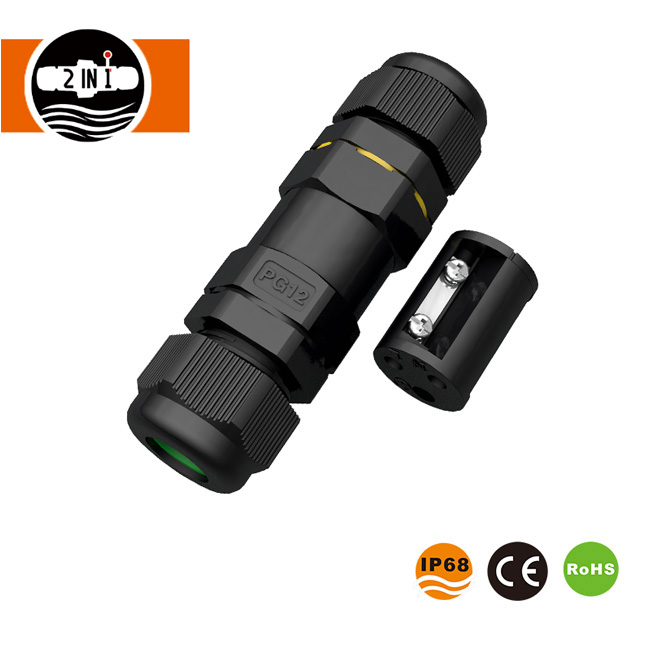
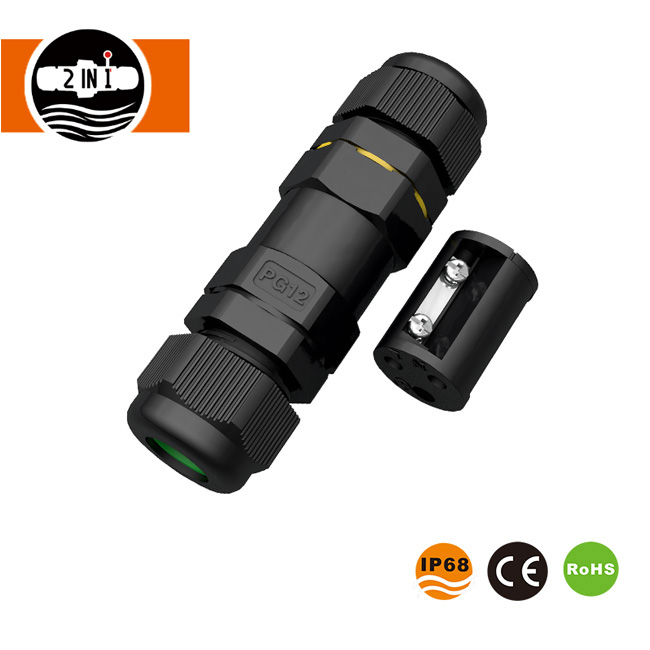
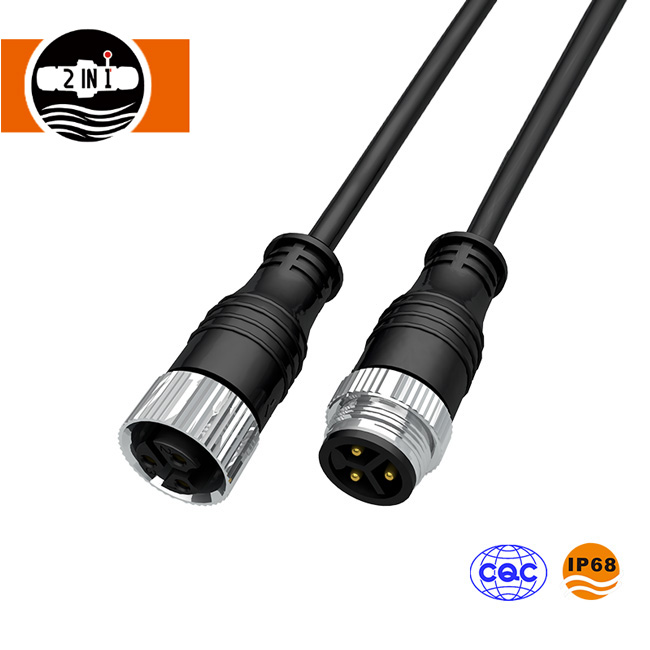
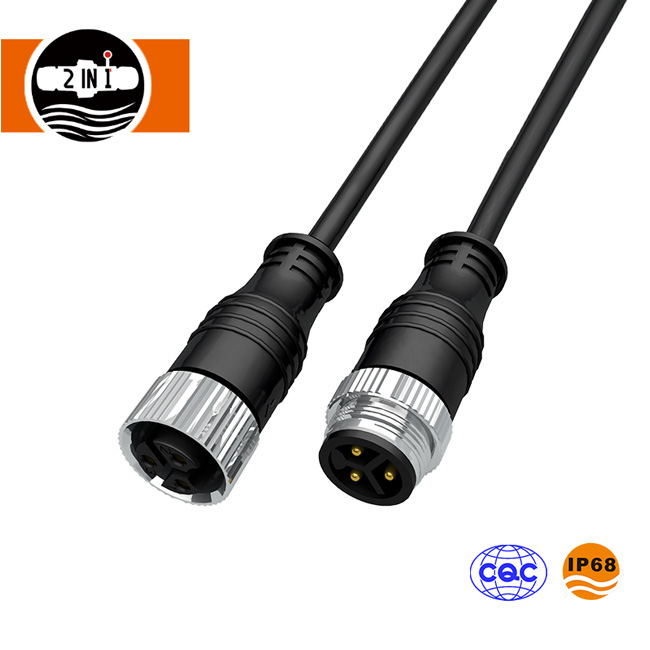
In fields such as outdoor equipment, industrial automation, marine engineering, and new energy vehicles, the reliability of electrical connections often determines the service life of the entire system. Waterproof circular connectors are designed to solve connection challenges in harsh environments involving moisture, dust, and vibration. They are more than just "plugs" – they are comprehensive engineering solutions integrating sealing, locking, and signal transmission.
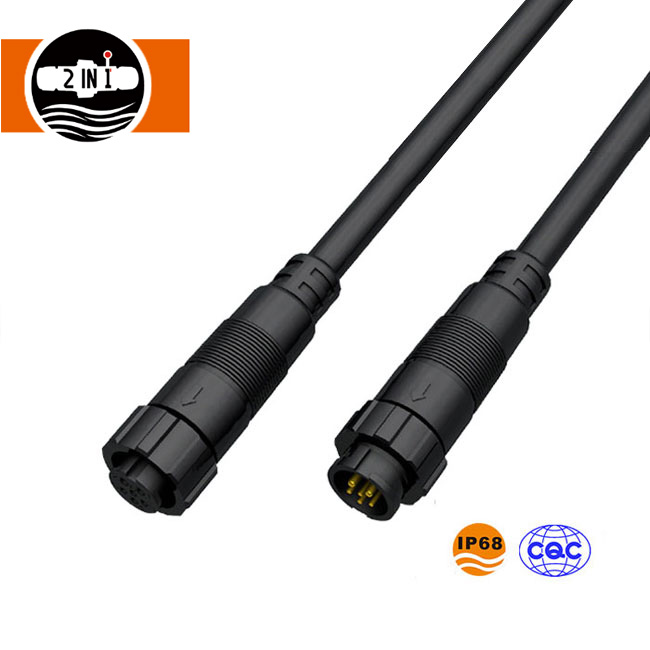
Why Choose Circular?
In engineering applications, the advantages of circular connectors stem from the natural rationality of their geometric structure.
-
High space utilization: The circular cross-section allows for the maximum number of contacts within the smallest footprint, enabling high-density pin configurations.
-
Simple sealing implementation: The circular profile, combined with O-rings or gaskets, creates uniform radial pressure, ensuring reliable sealing performance.
-
Superior mechanical strength: Circular housings distribute stress evenly, offering better impact and vibration resistance than rectangular connectors. Threaded and bayonet locking mechanisms provide more robust mating security.
In contrast, standard non-waterproof connectors are typically suitable only for dry indoor environments. Without sealing structures, they are prone to failure due to water ingress or UV degradation when exposed outdoors.
Understanding IP Ratings: The First Step in Selection
"Waterproof" is a general concept that must be quantified using IP (Ingress Protection) ratings in engineering practice. According to the IEC 60529 standard, the first digit after IP represents dust protection, and the second digit represents water protection.
|
IP Rating
|
Protection Capability
|
Typical Applications
|
|
IP65
|
Dust-tight, protected against low-pressure water jets
|
Outdoor lighting, general rain exposure
|
|
IP66
|
Dust-tight, protected against powerful water jets
|
Factory wash-down, deck equipment on vessels
|
|
IP67
|
Dust-tight, protected against temporary immersion (1m/30min)
|
Outdoor sensors, areas with potential short-term water accumulation
|
|
IP68
|
Dust-tight, protected against continuous immersion (depth defined by manufacturer)
|
Submersible equipment, long-term outdoor buried installation
|
|
IP69K
|
Dust-tight, protected against high-pressure/high-temperature water jets/steam cleaning
|
Food processing, heavy-duty vehicle chassis cleaning
|
Key Note: The IP rating of a connector typically refers to its protection capability in the mated condition. If the equipment port is exposed for extended periods, a protective cap must be installed; otherwise, protection is compromised.
Materials and Structure Determine Lifespan
Beyond IP ratings, material selection directly affects connector longevity in specific environments.
-
Housing Materials: For long-term outdoor use, thermoplastic materials (such as polycarbonate and PBT) are recommended – they are lightweight, corrosion-resistant, and offer UV resistance (UL F1 certified). Metal housings (aluminum alloy, stainless steel) are suitable where higher mechanical strength or EMI shielding is required, with stainless steel being the preferred choice for marine salt-spray environments.
-
Locking Mechanisms:
-
Threaded Locking: Most reliable, excellent vibration resistance, suitable for heavy industry.
-
Bayonet/Push-Pull Locking: Enables quick insertion and extraction with clear audible "click" feedback, saving significant installation time, especially ideal for overhead or confined-space operations.
-
Contacts: To ensure signal stability, contacts are typically made of copper alloy with gold plating to resist oxidation and corrosion.
Practical Considerations in Installation and Maintenance
In actual installation and maintenance, the following points directly determine whether the connector's protection performance is fully realized:
-
Avoid cable strain: Never pull the cable to mate or unmate the connector. Cable strain can damage the rear sealing structure, causing IP rating failure. Ensure adequate strain relief is provided for the cable during installation.
-
Hand-tighten only: Except for special tool ports, all locking operations should be performed by hand. Over-tightening with wrenches or tools may damage threads or the housing.
-
Regular inspection: Periodically check whether sealing rings are aged or cracked, and whether contacts are corroded or contaminated. For ports not used for extended periods, seal them with protective caps.
Mainstream Brands and Series on the Market
Depending on different application requirements, a range of mature series products are already available on the market:
Amphenol: Its X-Lok series supports quick push-pull locking, and the M12 S-Code series meets the IEC 61076-2-111 standard, offering IP67/IP68/IP69K protection grades, suitable for industrial automation and rail transit.
Omron: The XS5 series (M12 SmartClick) features an innovative internal locking structure that prevents debris jamming, supports 1/8-turn quick locking, and is widely used in factory automation scenarios such as automotive, food and beverage.
Bulgin: Its 400 series provides IP68/IP69K protection, covering power, data, and RF connections, suitable for harsh environments such as marine and food processing.
Souriau - Eaton: The UTS series features a plastic housing with 1/3-turn bayonet locking, with some models maintaining IP68 rating even in unmated condition, and supports mixed power and signal configurations.
HuaYi-FaDa: The M26 series offers both overmolded and detachable versions, supporting IP68 protection grade, featuring flame-retardant, anti-oxidation, and corrosion-resistant properties, suitable for LED lighting, stage equipment, smart grid, solar energy, and automation equipment, with customized services available including cable length and housing color options.
All third-party brand names and product models mentioned in this article are the property of their respective owners and are provided for reference purposes only. HuaYi-FaDa Technology is an independent manufacturer and has no affiliation with the aforementioned brands unless otherwise expressly stated.

 English
  Español
  Português
  русский
  Français
  日本語
日本語  Deutsch
  tiếng Việt
  Italiano
  Nederlands
  ภาษาไทย
  Polski
  한국어
한국어  Svenska
  magyar
  Malay
Malay  বাংলা ভাষার
  Dansk
Dansk  Suomi
Suomi  हिन्दी
  Pilipino
  Türkçe
  Gaeilge
  العربية
  Indonesia
  Norsk
Norsk  تمل
تمل  český
český  ελληνικά
  український
  Javanese
  فارسی
فارسی  தமிழ்
தமிழ்  తెలుగు
  नेपाली
  Burmese
  български
  ລາວ
ລາວ  Latine
  Қазақша
  Euskal
  Azərbaycan
  Slovenský jazyk
  Македонски
  Lietuvos
  Eesti Keel
  Română
  Slovenski
  मराठी
मराठी  Srpski језик